Forkelo guide
The Rotten Tomatoes of food, for the dish not the restaurant.
The Rotten Tomatoes of food is for the dish, not the restaurant. Rotten Tomatoes helps you choose a movie. Forkelo helps you choose a dish.
Rotten Tomatoes helps you choose a movie. Forkelo helps you choose a dish. The Rotten Tomatoes of food is for the dish, not the restaurant: for dishes what Rotten Tomatoes is for movies.
Restaurant ratings tell you people liked the place. Forkelo ranks the food itself — the smash burger, the burrito, the ramen, the sandwich. A 4.6-star place can serve a forgettable burrito. A 3.9-star place with slow service can serve the best one in the county. Films have had a consensus number for a generation. Restaurants have had stars for longer. The plate never did. That gap is what Forkelo is built to fill.
See it on a ranking
Open a plate you already crave. Each card is one dish at one restaurant. The number is about that plate, not about how much people liked the parking or the wait.
- Smash burgers in the South Bay
- Tonkotsu ramen in the South Bay
- Tri-tip in the South Bay
- California burritos in the South Bay
Who builds this is on about. More guides live at /guides.
Why the dish beats the restaurant average
A restaurant star is an average over the visit: food, wait, room, parking, and the day someone's order was wrong. When you are hungry, you are not shopping for that average. You are shopping for one plate.
That is why two places with similar stars can feel nothing alike once you order. The burrito at the slow counter can outrank the burrito at the polished room. The smash burger at the quiet spot can beat the one at the loud favorite. The tonkotsu that locals argue about can sit next to a bowl that only shows up as "noodles were fine" in a five-star review of the restaurant.
Restaurant averages fail for the same reason a movie score would fail if it averaged the film with the lobby, the popcorn line, and the parking garage. Useful information about the thing you came for gets mixed with everything else, then thrown away. No later math recovers it.
People already shop this way in conversation. "Where should I get a California burrito?" is not the same question as "What is a good restaurant nearby?" One points at a plate. The other points at a building. Forkelo is built for the first question.
Forkelo's founding rule follows from that: a restaurant's overall rating is never evidence about a dish, and cannot become an input to a score by any path. The ranking is a directory of plates, not a popularity contest for restaurants.
How to read a card
A card that says 9.4 · High confidence and a card that says 9.6 · Limited data are both published on purpose. The first number is how good the dish looks given the evidence. The label next to it is how much evidence is behind it.
Limited data is not a secret demotion. It usually means the dish still needs more research, more kinds of sources, or both. A top spot with limited data is a to-do for the research team, not a finished verdict. You can still open the ranking; you just know which cards are thin.
How the score stays honest
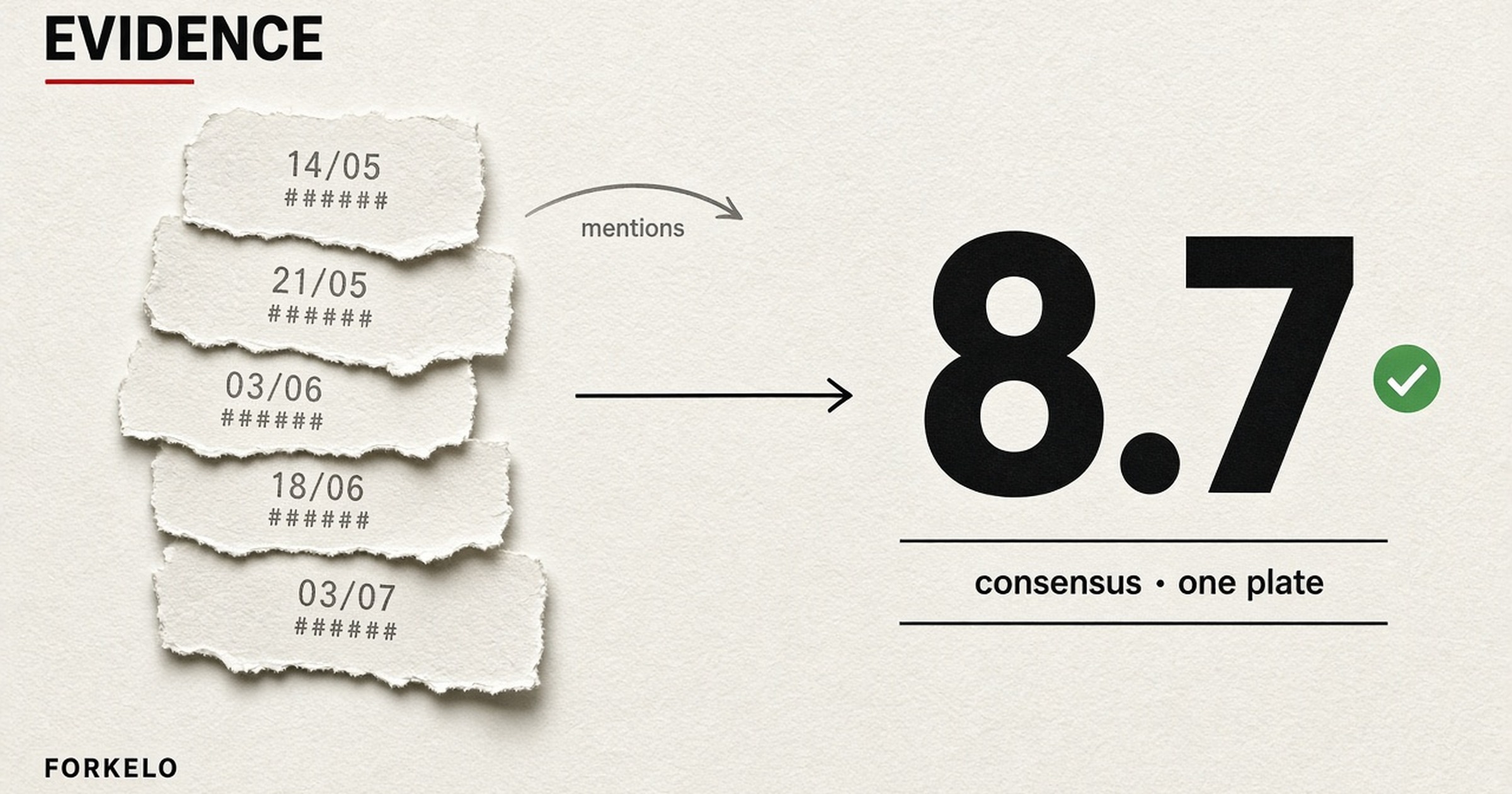
In plain English: Forkelo only reads dated mentions of that specific dish. It weighs how strongly people recommend the plate, prefers fresher mentions, and resists crowning a dish on two raves alone. Restaurant stars, popularity, price, photos, pay-to-rank, and editorial thumbs never enter the number. Forkelo does not taste the food; researchers file the mentions, and the score is a pure function of those rows.
The full arithmetic, every constant, and the worked examples live on the methodology page. This guide does not re-derive them.
A few straight answers
What is the Rotten Tomatoes of food?
A consensus-shaped score for one dish at one restaurant, not an average over everything a restaurant does. Forkelo's version is for dishes what Rotten Tomatoes is for movies: one checkable number aimed at the plate you are choosing.
How is a Forkelo Score different from restaurant stars?
Stars average the whole visit. A Forkelo Score only reads dish-specific mentions. Restaurant ratings never enter the number, even as a tie-break or a prior.
How is it different from a Tomatometer?
A Tomatometer-style score is usually a headcount: the share of voices that were positive. Forkelo weighs how strongly and how recently a plate is recommended, and prints confidence beside the score instead of a silent quality badge. It does not use that branding, and the ranking is not a percentage.
What goes into the score?
Dated, dish-only mentions and how strongly they recommend the plate, with fresher evidence counting more and thin piles of praise held back from minting a ten. Full constants and worked examples are on the methodology page.